
criminal defense
A drug charge in Florida, from simple possession to trafficking, can bring mandatory minimums, a driver’s license suspension, and a permanent record. Andrew Jeacoma fights to suppress unlawful searches, expose forensic flaws, and keep drug convictions off your record.
If you have been arrested for drug possession in South Florida, do not wait. Call Jeacoma Law today for a confidential consultation.
DRUG CHARGES IN FLORIDA
Florida law makes it a crime to knowingly possess a controlled substance unless it was lawfully obtained from a practitioner or under a valid prescription. Under § 893.13, Fla. Stat., possession can be actual or constructive. Actual possession generally means the substance was on your person or within your ready reach and under your control. Constructive possession means it was in a place you could control and you knew it was there. That distinction matters, and it is often where a defense begins.
Controlled substances in Florida are organized into five schedules based on their potential for abuse and whether they have an accepted medical use.
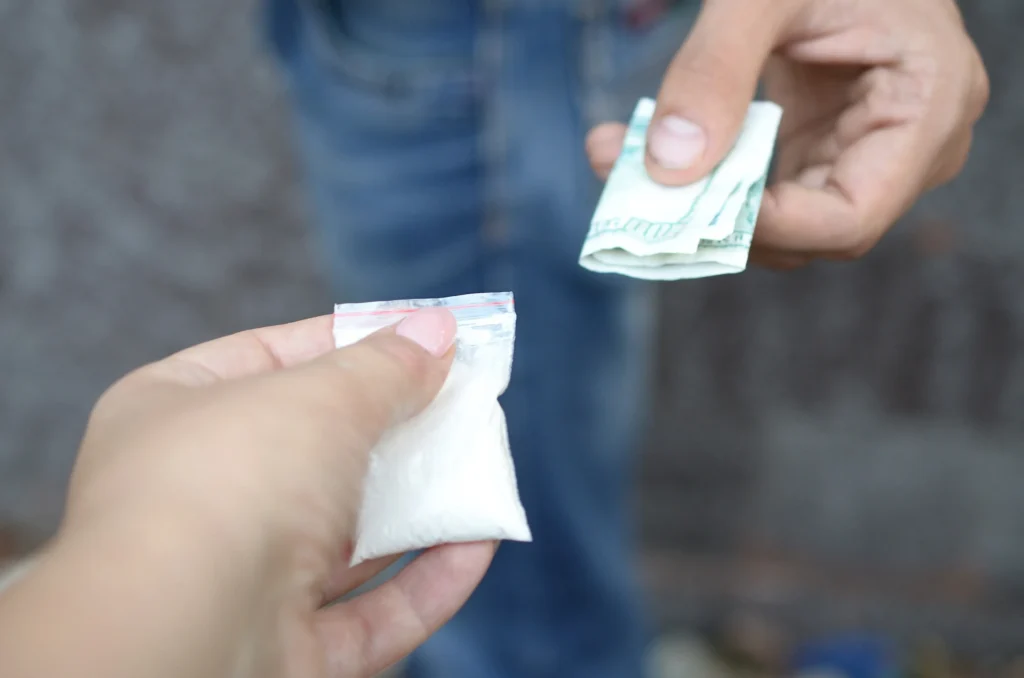
Schedule I substances have no accepted medical use and a high potential for abuse. Examples include heroin, LSD, and MDMA.
Schedule II substances have accepted medical uses but a high potential for abuse. Examples include cocaine, methamphetamine, and oxycodone.
Schedules III through V include substances with decreasing potential for abuse, such as anabolic steroids, benzodiazepines, and certain prescription cough medications.
The substance’s schedule and the amount in your possession both affect how the charge is classified and what penalties you face.
Florida drug trafficking is defined by quantity, not intent. You do not have to be caught selling anything to face a trafficking charge. If the amount in your possession meets the statutory threshold for that substance, trafficking charges can be filed. The difference between a possession charge and a trafficking charge can mean the difference between probation and a mandatory minimum prison sentence. If you are facing either, the time to act is now.
Florida imposes serious penalties even for possession of small amounts. What you face depends on the type of substance and the quantity.
In addition to jail time and fines, a drug conviction requires the court to suspend your driver’s license for six months, or until you are evaluated for and complete any required drug treatment, even if the offense had nothing to do with driving. A judge may allow a business-purposes-only license, but only upon finding a compelling reason. If you drive to work, drive your kids, or simply cannot afford to lose your license, that consequence alone is a reason to fight the charge.
The steps after an arrest move quickly, and what you do in those early stages matters.
If you are not released on bond after booking, you will be brought before a judge within 24 hours for a first appearance, during which the judge sets release conditions. At arraignment, you will enter a plea. From there, both sides exchange evidence during discovery, and you may file pretrial motions to challenge how the evidence was obtained or to seek dismissal.
Depending on the facts, the case may resolve through negotiation or proceed to trial. At each stage, the goal is the same: leave you better positioned than you were the day before.
Every case is different, but there are several defenses that arise frequently in drug possession cases.
Challenging the search is one of the most common defenses. If law enforcement violated your Fourth Amendment rights during the search, the evidence obtained may be suppressed (thrown out). Without that evidence, the State’s case often collapses.
Lack of knowledge is another issue. The State must prove you knew the substance was present. Florida law allows the defense to argue that you did not know the substance was illegal, although a jury may presume knowledge from possession alone.
Constructive possession challenges arise when drugs are found in a shared space, a vehicle with multiple occupants, or somewhere not exclusively under your control. Proximity alone is not enough.
Chain-of-custody and lab-testing issues can also undermine the prosecution’s case if procedures were not properly followed.
A drug possession charge is serious, but it is not the end of the road. There are defenses, and most of them depend on moving early.
Andrew Jeacoma is a former Palm Beach County assistant public defender who tries cases, and he handles every matter personally. Call (561) 603-2203 for a confidential consultation. Serving clients throughout South Florida, including Palm Beach, Martin, and St. Lucie counties.
§ 948.08(6), Fla. Stat
Who qualifies:
● charged with a nonviolent felony, such as felony drug possession
● Identified as having a substance abuse problem and amenable to treatment
● Not also charged with a crime involving violence
● Two or fewer prior felony convictions, all nonviolent
How it works:
This is not a favor the prosecutor grants. If you qualify and agree to participate, the statute provides that the court shall admit you upon a motion by either side or on the court’s own motion. The State can exclude you only by proving at a hearing that you were involved in dealing or selling drugs, and a judge has discretion to deny admission if you have prior felony convictions.
Result:
On successful completion, the court must dismiss the charges. You may then be eligible to have your arrest record expunged.
§ 948.16, Fla. Stat.
Who qualifies:
● Charged with a misdemeanor, including possession of 20 grams or less of cannabis
● Identified as having a substance abuse problem
● No prior felony convictions
Result:
On successful completion, the court must dismiss the charges.
§ 948.08(2), Fla. Stat.
Who qualifies:
● Charged with a misdemeanor or a third-degree felony
● First offender, or no more than one prior nonviolent misdemeanor
How it works:
Requires the consent of the State Attorney, the judge, and any victim, and a waiver of your right to a speedy trial during the diversion period.
Result:
Successful completion can lead to dismissal of the charges, so how you present your case from the start matters.
Call before the next hearing, not after. The consultation is free and confidential.